sugarcane
Going the Distance Case Study
Going the Distance Project: Helping growers identify and manage soil constraints
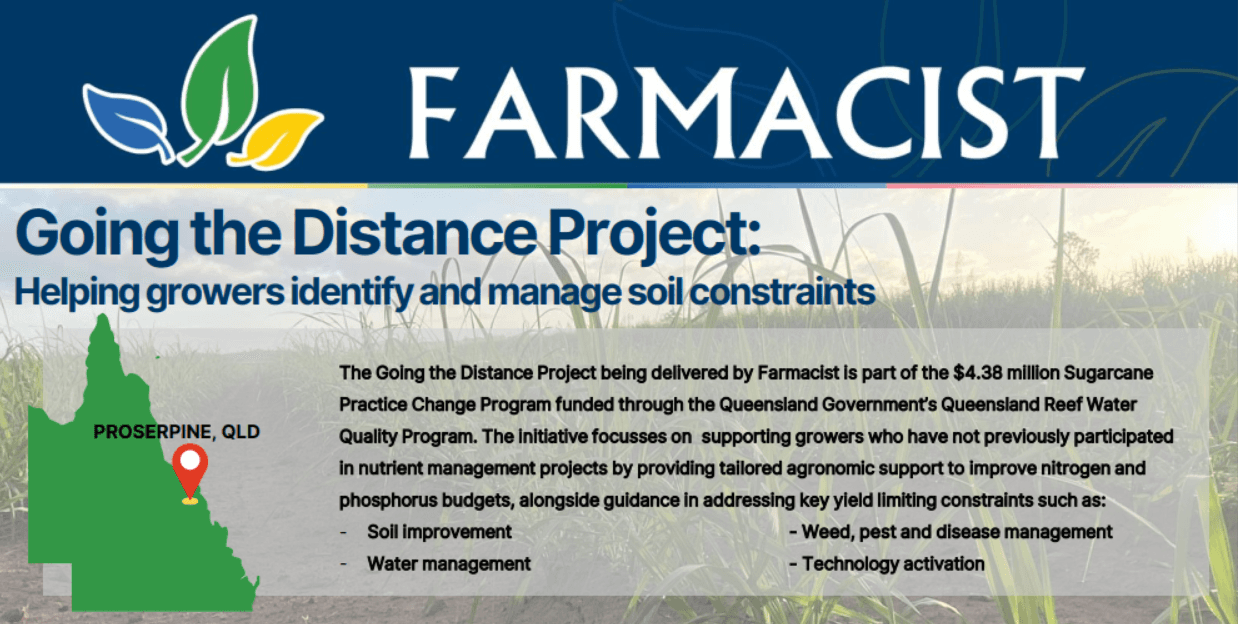
PROSERPINE, QLD
The Going the Distance Project being delivered by Farmacist is part of the $4.38 million Sugarcane Practice Change Program funded through the Queensland Government's Queensland Reef Water Quality Program. The initiative focusses on supporting growers who have not previously participated in nutrient management projects by providing tailored agronomic support to improve nitrogen and phosphorus budgets, alongside guidance in addressing key yield limiting constraints such as:
Soil improvement
Water management
Weed, pest and disease management
Technology activation
Background
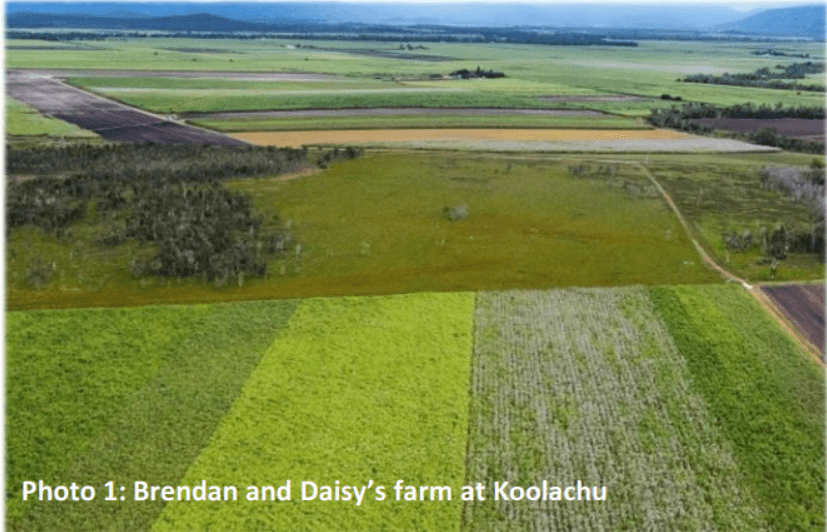
Brendan and Daisy Smith farm 100 hectares of sugarcane at Koolachu, north of Proserpine in the Whitsunday region. While they both have a background in agriculture, they have only recently ventured into cane production. When the opportunity arose to purchase the neighbouring sugarcane property in 2022, they saw it as a chance to diversify their cattle and horse breeding enterprise.
Soil Constraints
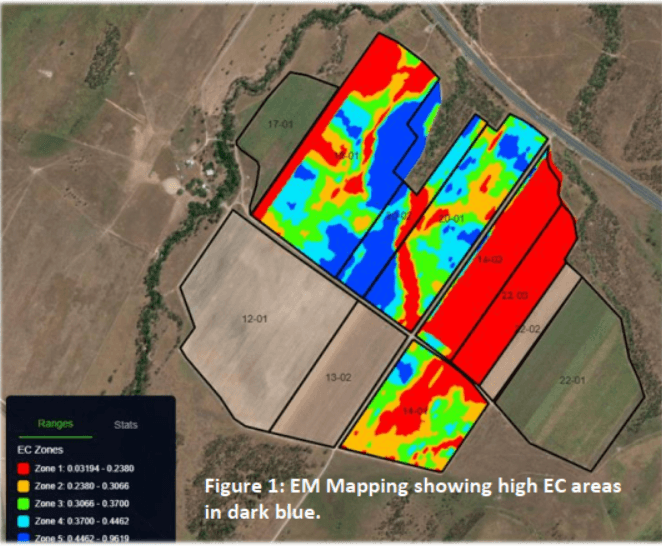
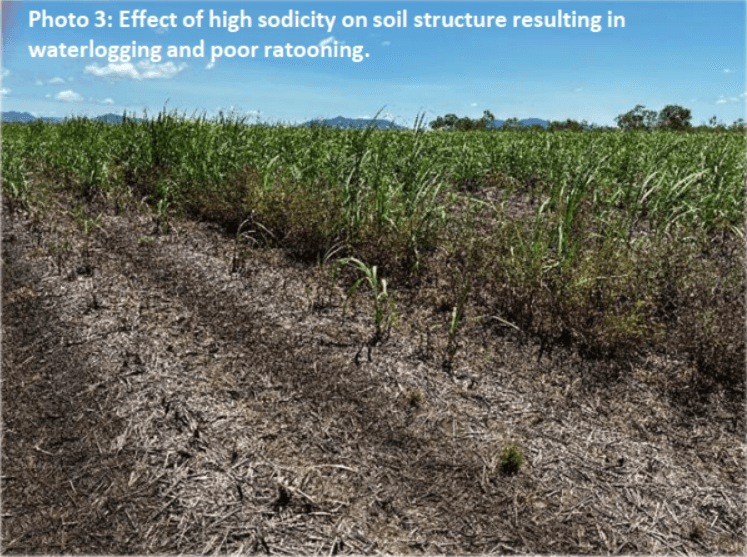
Brendan and Daisy had previously undertaken EM (electromagnetic) soil mapping on a portion of their property with the aim of identifying potential sodic 'hot spots'. A soil is considered sodic when the sodium ion concentration is greater than or equal to 6% of the total concentration of salts present in the soil (measured as an ESP[%]). Sodium ions attach to clay particles, causing them to disperse when wet. This results in sealing and crusting of the soil surface and a dense subsoil which resists root and water penetration.
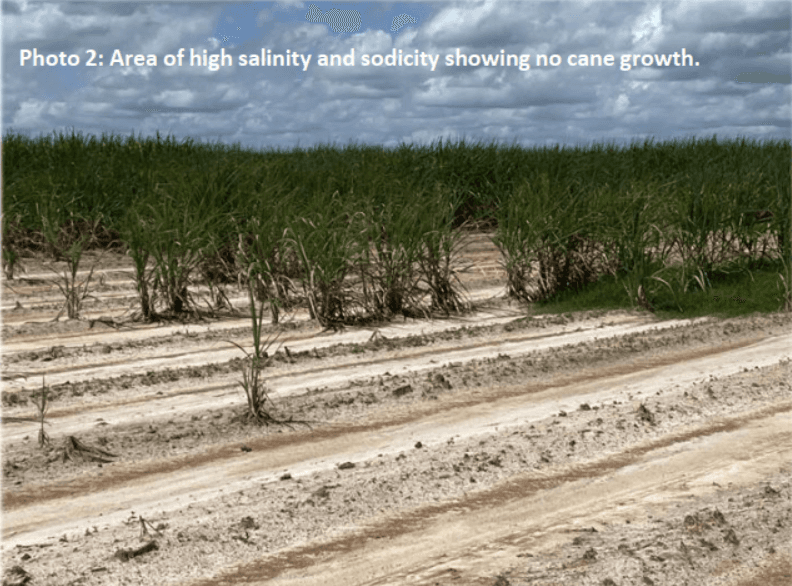
The EM mapping highlighted a number of areas within existing cane blocks as having high EC readings. Soil testing of these areas identified high sodicity and in some cases high salinity as major issues affecting productivity. Saline soils have a high concentration of soluble salts in the soil solution (the degree of salinity is measured by Electrical Conductivity [EC]). These salts can be a combination of a number of ions but sodium chloride is the most common. Salinity restricts growth by reducing the amount of water available to the plant.
Challenges of farming
Brendan and Daisy knew it wouldn't be an easy road learning how to farm. For example, understanding sugarcane terminology turned out to be a bit more difficult than anticipated. But they both enjoy a challenge and found it rewarding because it was so different to what they already knew.
The area they farm in is renowned for its sodic duplex soil, tea tree plains and poor drainage. These soil constraints added another layer of complexity to their farm management. In order to effectively identify the extent of their limitations, determine best treatment options and monitor progress, they decided to take part in the Going the Distance project being delivered by Farmacist.
Action Plan
For Brendan and Daisy, drainage will be a major focus in the coming years. Effective drainage is crucial for ensuring the success of soil treatments such as lime and gypsum in removing excess salts and sodium from paddocks. Blocks being fallowed will be prioritised for laser levelling.
Lime and gypsum will be used to treat high sodium paddocks and will be dependent on soil pH in combination with improving soil organic matter. Through green manure crops, trash blanket retention and mill mud application. Increasing organic matter will improve soil structure, resulting in enhanced internal drainage.
The areas that have had EM soil mapping completed will undergo further soil testing to ground-truth readings. From these results, variable rate maps will be developed for lime, gypsum and mill mud to reduce costs during periods of low sugar prices. While continuing soil treatment activities
In sections where salt and sodicity are extremely high, the best approach may to take theses areas out of sugarcane production. This will be possible where the problem occurs at the end or side of blocks.
Other longer-term management options being discussed include:
optimising irrigation to suit the soil type by reducing furrow irrigation run length, using two cups per row and irrigating every second row to reduce losses to deep drainage;
changing the row profile to raise bed height to allow more roots to be above the waterlogged zone;
planting more salt-tolerant crops such as Rhodes grass to keep blocks in some sort of production and remove salts from the paddock and
strategic planting of trees to help drop the water table below the soil surface.
Benefits of project involvement
For Daisy and Brendan, the major benefits of participating in the Going the Distance project have been increased access to education and information.
"Having someone to talk through all the options is valuable as is having the time to digest information before having to make a decision." said Daisy.
Brendan agreed. "Having access to a professional agronomist that knows our farm and can shed light on our constraints and suggest ways of how we can fix these going forward has helped improve our knowledge and understanding."
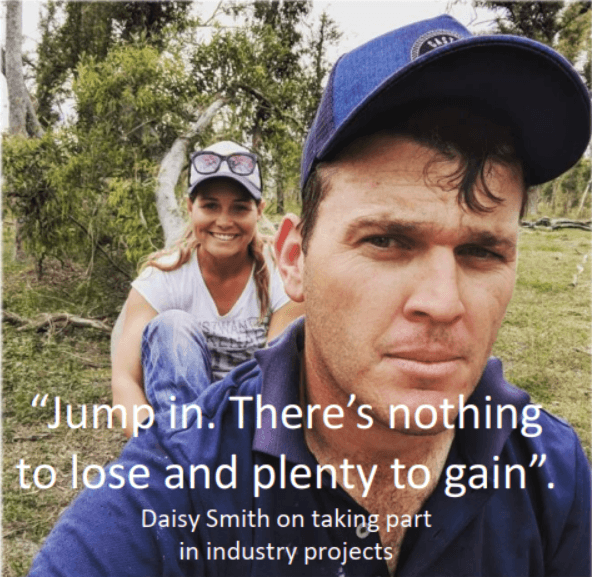
"Jump in. There's nothing to lose and plenty to gain".
— Daisy Smith on taking part in industry projects
The Going the Distance Mackay Whitsunday project delivered by Farmacist is part of the $4.38 million Sugarcane Practice Change Program funded through the Queensland Government's Queensland Reef Water Quality Program.