Sunn Hemp in Sugarcane Rotations: Nitrogen Fixation, Nematode Suppression and Soil Carbon
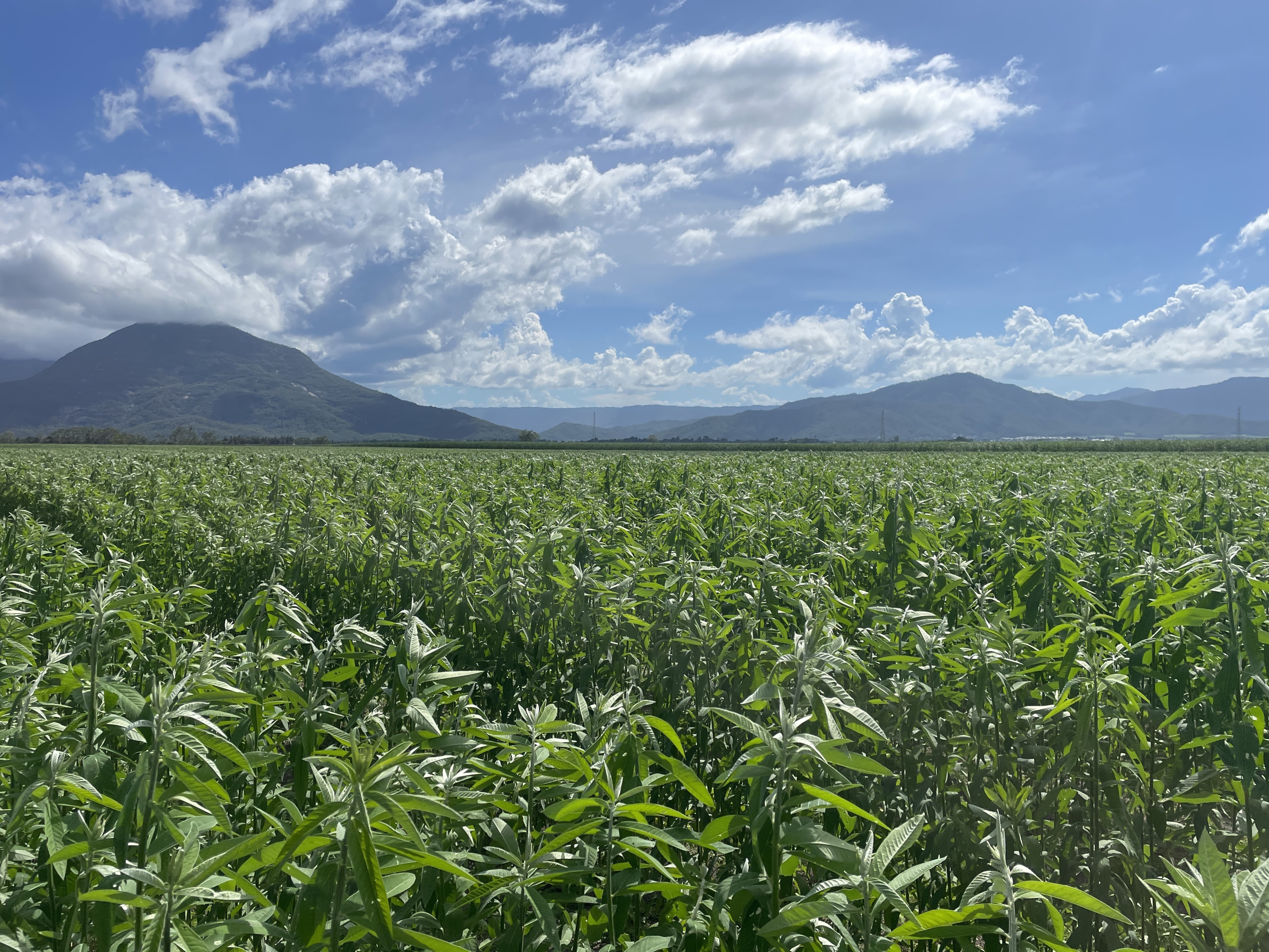
Sunn Hemp in Sugarcane Rotations: Nitrogen Fixation, Nematode Suppression and Soil Carbon
Sunn hemp (Crotalaria juncea) is one of the more versatile fallow options available to sugarcane growers. Like other legumes — soybeans, peanuts and the rest — its roots fix nitrogen from the atmosphere through Rhizobium bacteria. But it brings a wider package of benefits than a conventional fallow crop, which is why it has been researched and trialled as a fallow and cover-crop option in the Mulgrave mill area.
Why growers use sunn hemp
In sugarcane systems, sunn hemp is used in crop rotation as a fallow or cover crop, delivering several benefits at once:
Nitrogen fixation. Through its Rhizobium symbiosis it adds biologically fixed nitrogen to the system, reducing the nitrogen the following cane crop needs.
Nematode suppression. Robinson and Reynolds (2022) found sunn hemp could be used as a strategy to reduce nematode pressure — a benefit conventional fallows do not offer.
Biomass and organic matter. As a fast-growing legume it produces substantial biomass, feeding soil organic matter and the soil-health benefits that follow.
Biomass and nitrogen contribution
Quantifying the nitrogen benefit starts with biomass. Robinson and Reynolds (2022) noted dry-matter assumptions of around 25% of green-matter production in sunn hemp crops. To estimate the nitrogen available to the following cane, a total nitrogen content of 1.50% (Total N%) was adopted for the sunn hemp crop, allowing nitrogen rates for the subsequent sugarcane in the Mulgrave mill area to be adjusted downward to reflect the legume's contribution. This is the mechanism by which a sunn hemp fallow translates into a real reduction in applied nitrogen.
The table below shows the estimated total nitrogen contribution at different dry matter biomass levels:
Legume Crop | Dry Matter (t.ha⁻¹) | N % of Dry Mass | N Content Above Ground (kg.ha⁻¹) | N Content Below Ground (kg.ha⁻¹) | Total N Contribution (kg.ha⁻¹) |
|---|---|---|---|---|---|
Sunn hemp | 4 | 1.50 | 60 | 18 | 78 |
Sunn hemp | 6 | 1.50 | 90 | 27 | 117 |
Sunn hemp | 8 | 1.50 | 120 | 36 | 156 |
Sunn hemp | 10 | 1.50 | 150 | 45 | 195 |
Sunn hemp | 12 | 1.50 | 180 | 54 | 234 |
Sunn hemp | 20 | 1.50 | 300 | 90 | 390 |
Soil health and organic carbon — with appropriate caution
Soil sampling tracked organic carbon around a sunn hemp crop grown ahead of a second-ratoon sugarcane crop. A sample taken at 0–20 cm depth before planting the sunn hemp recorded soil organic carbon of 0.90%. While incorporating sunn hemp residues can deliver soil-health improvements, the measured increase in soil organic carbon over this single cycle was not, on its own, sufficient to draw firm long-term conclusions. The Mineralisation Index after the sunn hemp was around 7% higher than before it — an encouraging direction, but a single-cycle signal rather than proof.
Soil organic carbon changes slowly in the soil, and a single fallow crop is unlikely to produce a major or lasting shift. These results should therefore be interpreted with caution. To properly understand sunn hemp’s long-term impact on soil health, regular soil testing over multiple crop cycles is recommended, rather than relying on data from a single season.
How to get the best from a sunn hemp fallow
Sunn hemp shows significant utility for sustainable sugarcane systems, combining nitrogen fixation, nematode suppression, and biomass and organic-matter inputs. To realise that value:
Account for fixed nitrogen. Use the biomass and a Total N% figure (1.50% was used here) to credit the legume's nitrogen and reduce the following crop's rate.
Incorporate residues to feed soil organic matter and the soil biology.
Monitor over time. Sample soil organic carbon and biological indices at regular intervals to confirm the durable soil-health gains, rather than judging on a single season.
Key takeaways
Sunn hemp fixes atmospheric nitrogen via Rhizobium and can reduce nematode pressure (Robinson & Reynolds, 2022).
A Total N% of 1.50% was used with biomass to estimate the nitrogen contribution and reduce nitrogen rates in the following cane.
Soil organic carbon started at 0.90% (0–20 cm); the single-cycle increase was not sufficient alone to confirm long-term gains, though the Mineralisation Index rose ~7%.
Regular, repeated soil testing across multiple cycles is needed to confirm sunn hemp's long-term soil-health benefits.
Frequently Asked Questions
What are the benefits of sunn hemp as a sugarcane cover crop?
Sunn hemp (Crotalaria juncea) fixes atmospheric nitrogen through Rhizobium bacteria, can reduce nematode pressure (Robinson & Reynolds, 2022), and produces substantial biomass that adds organic matter to the soil. Together these can support reduced nitrogen fertiliser rates in the following sugarcane crop.
How much nitrogen does sunn hemp contribute to the following crop?
The nitrogen contribution is estimated from biomass and nitrogen content. A total nitrogen content of 1.50% was adopted for the sunn hemp crop, with dry matter assumed at around 25% of green-matter production (Robinson & Reynolds, 2022), allowing nitrogen rates for the following sugarcane in the Mulgrave mill area to be reduced accordingly.
Does sunn hemp improve soil organic carbon?
Incorporating sunn hemp residues can improve soil health, and the Mineralisation Index rose about 7% after the crop. However, with soil organic carbon starting at 0.90% (0–20 cm), the measured increase over a single cycle was not sufficient on its own to confirm long-term benefits, so testing at regular intervals across multiple cycles is recommended.
Can sunn hemp reduce nematodes in sugarcane?
Yes. Robinson and Reynolds (2022) found that sunn hemp could be used as a strategy to reduce nematode pressure, a benefit not offered by conventional sugarcane fallow crops.